Use this guide to make a clearer decision before you brief, order, or review a design project.
Packaging design moves faster than almost any other design discipline, driven by retailer shelf resets, e-commerce growth, sustainability pressures, and rapidly shifting consumer expectations. Here are the trends defining the best packaging in 2025.
1. Purposeful Minimalism
The maximalist chaos of the 2010s has given way to confident restraint. The best packaging in 2025 uses fewer elements — one strong typographic statement, a limited colour palette, generous white space — to communicate premium quality. Less information on the front panel, more impact per square centimetre.
2. Sustainable Materials as Design Feature
Sustainability is no longer a back-panel footnote — it's front and centre. Kraft paper, recycled board, unbleached natural fibres, and vegetable inks are being presented as design choices rather than constraints. Brands that treat their sustainable materials as a visual asset build trust with conscious consumers.
3. Bold Typography-Led Design
Where photography and illustration used to dominate packaging, typographic-led packaging has become a dominant trend — especially in craft food and drink, supplements, and beauty. A single, perfectly chosen typeface at confident scale can be more distinctive than any graphic element.
4. Retro and Heritage Revival
Nostalgia is a reliable consumer trigger, and retro-inspired packaging has been accelerating for several years. Victorian-era serif typefaces, illustrated label traditions from the 1920s–1950s, and Art Deco geometry are appearing across spirits, confectionery, and personal care.
5. Digital-First Packaging
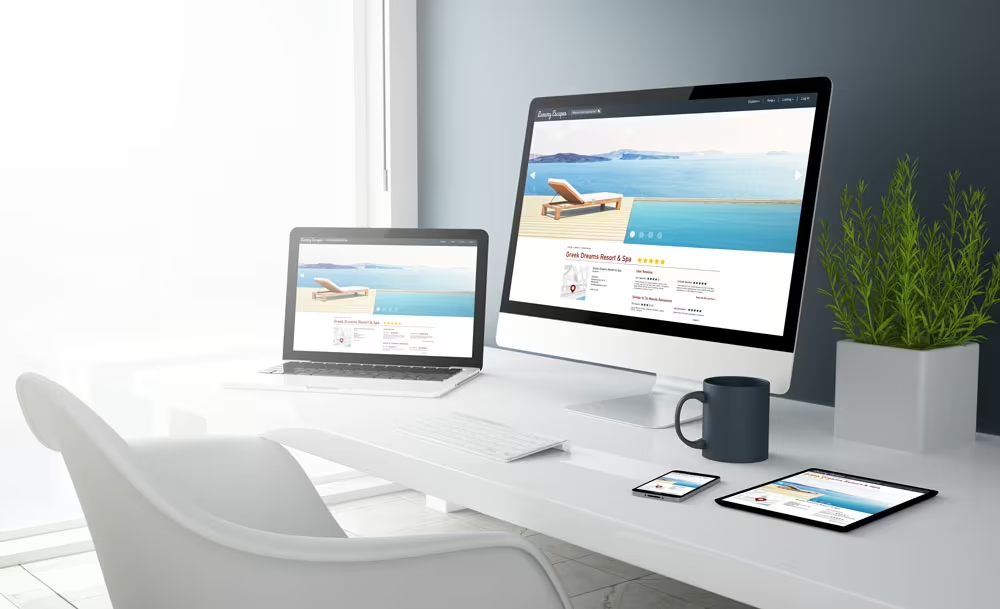
With more products sold online than on physical shelves, smart brands are designing packaging for the thumbnail first. This means bold, simple graphics that read clearly at 200×200 pixels and high-contrast colour choices that stand out on white e-commerce backgrounds.
6. Tactile Premium Finishes
As digital screens flatten physical differentiation, brands are investing in tangible finish effects: soft-touch matte laminate, spot UV gloss on a matte background, foil stamping, deboss and emboss. These finishes can't be replicated on screen, which makes them powerful physical premium signals.
7. Transparent Windows and Honest Packaging
Consumer trust in product claims has declined. Transparent windows — showing the actual product — build credibility by inviting inspection. Honest packaging design (accurate colour representation, visible ingredients, clear portion size) is consistently gaining shelf share.
Not every trend is right for every brand. If you're ready for a packaging refresh or new product launch, start a brief with ideahits — we'll research your category and develop packaging that stands out from the right starting point.